Archive

Archive for the ‘Cycling’ Category

Not hard to Swallow

April 25th, 2012 No comments

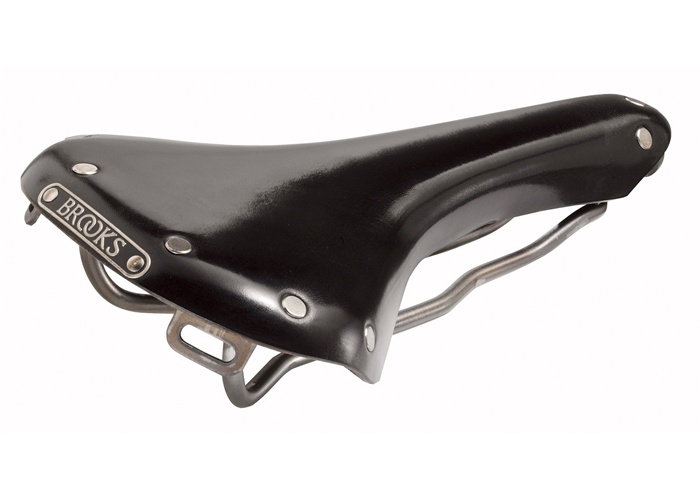
OK I have to admit I love Brooks Leather saddles. there is something just decidedly lovely about the old world charm of a leather saddle, which is then doubly charming when you realise that after a break in period they are more comfortable than most “comfort saddles” on the market. The logic being the leather will take the shape on one’s unique posterior and provide unparalleled comfort. Yes some big soft saddles are comfortable but for the hardcore rider who wants a narrow saddle the Brooks may offer comfort they haven’t seen. The downside? Well cost and weight. The lightest Brooks saddle is the B15 Swallow Titanium and at 360 g that would make some hard core weight weenies cry. But not only will it become comfortable the thing is a bloody work of art. Classic aesthetics meets real world functionality; the key to good design.

Saddle art: The classic Brooks Swallow Titanium race saddle - the father of all race saddles.

Categories: Cycling Tags: , ,

Ortlieb Office Bag – Road Test

December 14th, 2011 No comments

Well today the my new Ortlieb Office Bag was tested by commuting to work on my bicycle. It carried all I needed it to carry, which included my Asus netbook, a change of clothes and lunch. It mounted onto the rack well with the QL2 mounting system which is so easy to adjust. When off the bike the bag stands up neatly not constantly falling over like my Carradice bag did.  All in all very happy with the bag. I can see why people rave about Ortlieb.

My new Ortlieb bag mounted on my Jamis Quest

Categories: Cycling Tags: ,

Ortlieb Office Bag

December 13th, 2011 No comments

Credit where credit is due, Wiggle’s shipping pace is bloody fantastic. I ordered an Ortlieb Office bag a week ago and here it is all the way from UK in a week. Now that is indeed impressive, particularly as shipping is included in the price.

The Ortlieb Office bag fulfills a desire I have had for a while to own an Ortlieb bag. Ortlieb bags are cool indeed, they are fully waterproof, this one uses their classic roll top closure. Believe it or not the bag is actually made in Germany, not China or some other cheap manufacturing centre. On arrival the bag is very neatly packaged, which adds to the feeling of a quality product.

Ortlieb Office Bag in packaging

The bag uses Ortlieb’s QL2 mounting system which is very easy to adjust and setup for each rack, no tools were necessary. The bag is not huge but should be large enough for my netbook and a change of clothes for work. You can see a fair amount of space with only my netbook in there.

Ortlieb Office Bag open with netbook inside

The bag is quite a neat looking bag when closed, in fact it looks like many other office bags. My previous bag the Carradice Bike Beureau was larger but nowhere near as neat looking as the Ortlieb.

The Ortlieb closed and looking neat

Now the true test will be when I use it for my commute. The damn rain we have had lately, only a problem because I’m not as waterproof as the bag. I’m told I am made of sugar ;-)

Categories: Cycling Tags: , ,

Juxtaposition

November 28th, 2011 2 comments

My Jamis Quest in front of some very dull Toyotas

Now this photo reveals a juxtaposition. You see in the foreground is something rather cool. My Jamis Quest road bike with its Reynolds 631 frame giving a super smooth ride, yet still keeping it light and nimble. Flash Ultegra crankset and my Speedplay Frog pedals giving wonderful free float to save the knees. Notice also the Camelbak Podium bottles. As I said cool.

Now check out the background, this cycle path goes behind the Toyota complex at Caringbah. And what we have there is a world of mediocrity; i.e. uncool. A variety of DULL Toyota cars, because I feel Toyota is as about as exciting as a white good. Oh sure they can be reliable but that is DULL too (except all those recalls on the Corolla). And check out that idiotic FJ Cruiser, they make a retro 4WD and it doesn’t have a diesel option. Crazy and DULL.

So in summation: My bike cool, Toyota not cool.

Recumbent Folly

November 27th, 2011 No comments

I am sure my post on Moultons managed to annoy some devotees, and that is to be expected. I would have been annoyed to read it a while back. Now dear reader it is time for me to tell you why I think that recumbents are a folly on a grand scale. There is nothing fundamentally wrong with the concept, let’s lie the rider back and reduce frontal area, and reduce the pressure on the butt. But once you move into the world of recumbents you move into an area of high cost for return and to be honest they rarely seem to deliver on all they promise. Let is compare apples and apples first.

Recumbent bikes and upright bikes.

The upright bike has been around since 1885 when the first River Safety bicycle appeared. It has been fine tuned into an efficient and high performance machine. Originally made with simple steels, then alloy steels, now frame materials range from the common alumnium alloys, to exotic composite frames and a small niche market of alloy steels still exists (cause remember Steel is Real). If anything there is an element of boredom in the upright world because it is the same basic designed that is simply tinkered with.

Now if you want to look at something different then we enter the world of recumbents (bents). Check out M5 or Optima to get an idea of the Euro bent world. Then check out Lightning or Easy Riders to see the American bent bikes. These are fantastic looking machines and show variety in design.  But they all cost a bloody fortune to get anywhere near the weight and performance of a $1500-$2000 upright. My Jamis Quest with its Reynolds 631 alloy steel frame weighs in at a touch over 9 kg. Most of these recumbents will be lucky to tip the scales at anything much under 11 kg for a medium size bike and if they have suspension as a number do then 15 kg may be the weight region. But to gain these weights we are dealing with expensive recumbents. In Australia they will cost around $5000; that’s a serious piece of cycling gear. Now I have only owned one recumbent bicycle, it was an M5 Shockproof and it looked cool (well for a recembent) but to be fair I never gave it a chnace. A few rides showed it to be twitchy with its tiller style steering and the seat wasn’t all the comfortable. It certainly wasn’t the armchair comfort you think you’ll get. It was a lot of money that didn’t offer the returns I hoped for.

Recumbent Trikes

Now in Australia recumbent trikes are more popular than bikes. In part due to the success for the world renowned Greenspeed tricycles. These are fun to ride, and were started by Mike Burrows with his Speedy tricycle which was the original iteration of the now famous Windcheetah trike. So with trike most are tadpole trikes, that means they have two wheels in front and one at the back. That means a long chain from the pedals to the drive wheel. Also to facilitate steep climbing many use  a hybrid gear system with a 27-30 speed dérailleur setup mixed with a 3 speed internal hub gear. This means a total of 81-90 gears, with massive overlap but a really low gear and a very high top gear. This arrangement though introduces massive drag into an efficient dérailleur mechanism. My first trike a Greenspeed GTR had the hybrid gear setup and I always felt it stodgy to ride. Get rid of the internal geared hub and my average speeds improved by 2 km/h straight away. Furthermore internal geared hubs are heavy, so a heavy trike weighing around 16-18 kg is heavier again with these hubs. So it is better to go a pure dérailleur setup and deal with the more standard gear range.

But the real killer with trikes is that the cheap ones (around $3000!) are damn heavy, around 18 kg, now that is double the weight of my current bike. Oh you can get lighter ones but they are dearer again, upwards to $5000 and $6000. My second trike was a Greenspeed GLR, this was more like a land luge. Low and fast and “only” around 14 kg. But it was heaps dearer, and nothing I have ever rode raised the ire of fellow road users more than this. Car drivers hated it cause it was low and they happily yelled abuse at me. Which made the whole riding experience even less satisfying. In recumbent publications you often read about the delightful comfort but I can’t say I found that. They aren’t arm chairs or car seats. They are hard in some ways and often bend your shoulders up, so you can look straight ahead because the lower the trike is the more stable it is to corner on. But it is not super comfortable.

So you’re thinking of a recumbent and you think why should I? Well don’t buy it imagining an armchair ride, you won’t get that. Don’t buy it for speed, particularly trikes because they aren’t faster (except maybe downhill). They aren’t better to commute on and they are like a mobile tanning bend in summer; you really get baked on hot days. And for all this you pay around twice what you would for an upright (upwrong as the recumbent riders say). There is a reason why recumbents have never displaced the upright, it isn’t just racing circles driving the upright’s dominance. It is simply that in spite of the upright bike’s foibles it still is overall the better cycling device for the average person. Oh and finally you look odd! No other way to say it, you are out of the ordinary, people will notice and they will comment.

Now say you want to ignore my lacklustre experiences with bents, and you are hell bent (pardon the pun) on one, go and see Ian Humphries at Flying Furniture. A good guy, and a recumbent evangelist who will have plenty to try. Maybe you’ll have a better experience than I did.

Categories: Cycling Tags: , , ,

Moulton Bicycles – Magnificent Engineering, but at a cost

January 12th, 2010 4 comments

Well back in 1998 I decided that my expanding girth could be addressed by cycling. I used to cycle a lot at school and it was one physical/sporting practice I was actually good at. So off I went with a new connection to the Internet and started searching. I found Moulton bicycles. Being totally enamoured with the Alex Moulton designed Hydrolastic suspension on my beloved Austin 1800 I decided this was a good place to start. It didn’t take long to discover that the really cool stainless steel Moulton bikes (such as the AM GT or NS) were going to cost me in excess of $10,000. Well not for me. So I searched and came across a Moulton APB14 Shimano Plus, this was an entry level Moulton bike made under licence by Pashley in the UK. A nice bike with mountain bike style gears and bars. It was $2,000 and was about 15 kg as equipped. No lightweight and quite pricey. Well I rode that bike for quite a while but found cycling to be a little uncomfortable. No matter what saddle I tried, be it a classic Brooks leather saddle, or a fancy gel saddle, comfort eluded me.

I altered the bike extensively to get drop bars with nice Shimano bar-end shifters, and all in all the bike was as I would specify it if I had built it. But the lack of comfort really puzzled me, so I decided it was time to investigate the recumbent world and so began my great Recumbent Folly.

But before I finish my story of Moulton bikes, let me say I love the idea of the Moulton, as an engineering teacher it makes sense to me. They are a work of beauty, particularly the NS Moulton with nearly 100 silver brazed joints on a 304 stainless steel frame. The use of small wheels with suspension, is terribly clever, and Moulton pioneered this for road bikes long before landing gear style suspension was thought of for off-road bikes. But the great failure of the Moulton concept, is they are a bicycles for the elite. Not elite cyclists, but the elite as in the wealthy. The NS Moulton costs around £4,500, now that is around AU$ 10,000 (depending on exchange rates). That makes a new carbon fibre road racer look cheap. And that is where my love affair with the Moulton turns sour. Alex Moulton has turned the humble bike into a work of art only the wealthy can truly afford. The only other way is to give up your car and then justify spending a similar amount on a bicycle. This is a tragedy because I had the pleasure of riding an NS Moulton and it is a revelation, light, fast, responsive and smooth like no other bike I have ridden. But this brilliant engineering will remain a mystery to most due to the high cost of joining the club.

It wasn’t always this way, back in the 1960′s Moulton managed to take on the established cycling world with his small wheel F-frame bicycles, complete with small wheels and suspension. But they failed to displace the established diamond frame/safety bicycle design and by the 1970s they were gone. When the new and advanced space frame Moultons came on the scene in 1983 Alex Moulton deliberately made them expensive high end machines and sentenced the average cyclist to the world of conformity. Sadly most will never get to ride the best Moultons, and never realise how good they are.

Ultimately my gripe with Alex Moulton is he has developed an improved bicycle, and it is only available to the wealthy, who else can justify a $10,000 bike, that can’t even be used in competitive races (banned by the UCI for a drafting advantage). Moulton bikes are truly lovely pieces of engineering but here in Australia, sadly the cost is just prohibitive, to the point of being ridiculous.

Categories: Cycling Tags: ,

Steel is Real

December 26th, 2009 3 comments

Ah the oft mentioned quote by any steel bicycle aficionado. Steel is indeed real. Well many will say that aluminium alloys are carbon fibre are hardly Unobtainuim but let’s just say that steel is indeed the real thing. Sadly this is not a view that pervades the general buying community.

Steel offers some great properties when it comes to bicycle frames, however to get real performance from steel with acceptable weight now involves using what are known as alloy steels.  But before I go any further let me say this there is no such this as an aluminium frame bike. They are aluminium alloy frames, aluminium is almost never used structurally in it’s pure state, it is too weak. Moreover to call an aluminium alloy frame an alloy frame is so erroneous it is not funny. For example, steel is an alloy, it is an alloy of iron and carbon, solder is an alloy on tin and lead. So we should be saying an aluminium alloy frame not an alloy frame  or aluminium frame.

I carry a bias here, when I finally replaced my recumbent trike (oh the folly), I sought out an alloy steel frame bike. The right price and look (and availability here in Australia) came for me in a Jamis Quest (2007 model). This has a Reynolds 631 alloy steel frame. This is a steel with additions of chromium, nickel and molybdenum, which actually means the steel air hardens. This allows the welded joint to improve its hardness and strength after welding. Unlike the related (and more expensive) Reynolds 853, Reynolds 631 does not have heat treatment done on the tube after being drawn out, so it has a lower Ultimate Tensile Strength (UTS). But it has stength to weight ratios equal to or approaching most aluminium alloys and importantly its stiffness to weight ratio is better than all aluminium alloys except X100 Aluminium lithium alloy.

So the main players of our story are steel, aluminium alloys and carbon fibre.

But isn’t aluminium alloy the best stuff?

Well no, in fact aluminium alloys offer some advantages to the hard core sprint cyclist but not the average rider nor the long distance rider. Aluminium alloy frames are made very stiff and as a consequence have very little flex, this means power is transmitted very well, but they tend to be “buzzy” particularly on rough roads or coarse chip bitumen reads we see in Australia.  They do tend to be lighter than a steel frame (particularly a low quality steel frame), and of course they are less likely to suffer detrimental corrosion than steel.

Now ignoring corrosion, because we can address that the big advantage is weight. But we are talking tiny variations when we get to high quality steel frames. My Jamis Quest with its Reynolds 631 alloy steel frame is about 200 grams heavier than a Jamis Ventura Elite (2007 model) 7005 aluminium alloy road bike with similar components. Interestingly the Jamis Ventura Race is exactly the same weight as the Quest, also with a 7005 frame.  Why?  Well in part it is due to the varying components on the three bikes and then in part due to the frame materials.  So let us stay with the 200 gram difference. Gee 200 grams. Let me consider that difference, if I eat a sandwich before a ride then that is the saving gone. Or if I carry two water bottles instead of one there it is gone again. Or I actually lose 2 kg and the  difference is shattered. Let us be serious that is bloody tiny. So for that 200 gram weight advantage I get a crap ride, yes there is no way that aluminium alloy frame will be as nice to ride as the steel frame. It will be stiff and uncomfortable and for a recreational rider like me the Quest will be significantly more comfortable.

Furthermore aluminium alloys have poor resistance to metal fatigue compared to steels. Metal fatigue is failure of a metal well below its traditional breaking point by repeated cyclic loads. This is like flexing or bending something constantly. Now a steel frame with good fatigue resistance can flex and absorb road shocks. While aluminium alloy frames must be built very rigidly to stop flexing due to its poor fatigue resistance. This is why many aluminium alloy frames have big thick tubes to avoid any flexing and then why they fail to have the vibration absorbing ride of steel.

Now the aluminium alloy is probably cheaper, because the mass production of aluminium alloy frames if down to a fine art now and the economies of scale mean it will be cheaper than the Reynolds 631 frame which requires a little more care in the welding stage. But what price comfort.

So why not buy carbon fibre?

Carbon fibre is the preserve of the hardcore racer who turns over bikes every three to five years. Many say carbon fibre gives the ride of steel but is lighter than the best aluminium alloy frames, but it is hardly durable. Carbon fibre does not fail plastically but moves straight to brittle failure. Sorry to get into serious material language, but when metals and their alloys fail they tend to deform elastically (non-permanent), then move to plastic deformation (permanent) then they fail in a brittle manner at the end (snap). Carbon fibre just snaps. So one day you hit a pot hole and… snap. No plastic deformation first. So carbon fibre gives the ride of steel but saves quite a bit of weight. But the price for that is a frame with less life, more likely to fail without warning and is more susceptible to damage from knocks on tubes. Finally find a carbon fibre frame with eyelets for a rack. Why carry a rack? Well humanity has invented these amazing luggage options that mean you don’t need a backpack. Backpacks are for walkers, I expect my bike to carry the luggage not me. So carbon fibre bikes being for hard core racers have no rack mounts which means you can’t carry your change of clothes and laptop to work unless you use a backpack.

Finally if steel is expensive compared to aluminium alloys then that falls apart against carbon fibre where you pay a lot more for that weight saving, oh and fragility.

Look my personal view  is backed up by my knowledge of metallurgy and an admitted clear bias towards ferrous metals, not by half truths of marketing. But marketing and ease of mass production means the days of huge numbers of fine steel frame bikes are gone. Most steel bikes are cheap clunkers that are the entry models before aluminium alloy. But if you get the chance to ride a good alloy steel frame you will understand exactly what I mean.

For a comparison of frame materials check out the Reynolds site. Alternatively check out the Columbus page on steel.

See a brief review of the 2008 Quest here.

Jamis Quest – Best value Enthusiast Road Bike